When your pet is older, unwell or experiencing ongoing health problems, it can be difficult to know how comfortable they really are. Some changes happen gradually, making it hard to recognise when their quality of life is beginning to alter.
Keeping a simple record of good days and difficult days can help you notice patterns. It can also give you something clear to refer to when speaking with your vet or considering your next steps.
Why keeping track can help
Your pet’s quality of life is about more than one individual symptom. It includes their physical comfort, behaviour, mobility, appetite and enjoyment of everyday life.
PDSA explains that quality of life is individual to each pet. Your vet can offer guidance, but you are also well placed to notice how your pet is coping from day to day.
You can read more in PDSA’s guidance on how to tell if your pet still has a good quality of life.
Start with what matters to your pet
Every pet has their own routines, preferences and favourite things.
One dog might enjoy gentle walks and greeting visitors. Another might be happiest resting beside you or enjoying a favourite treat. A cat may value time in the garden, watching birds or settling in a familiar spot.
Think about the activities and routines that usually bring your pet comfort or enjoyment. These can help you recognise when something is changing.
You could make a short list of three to five things your pet particularly enjoys. Then consider whether they can still do these things as usual, with some adjustments or not at all.
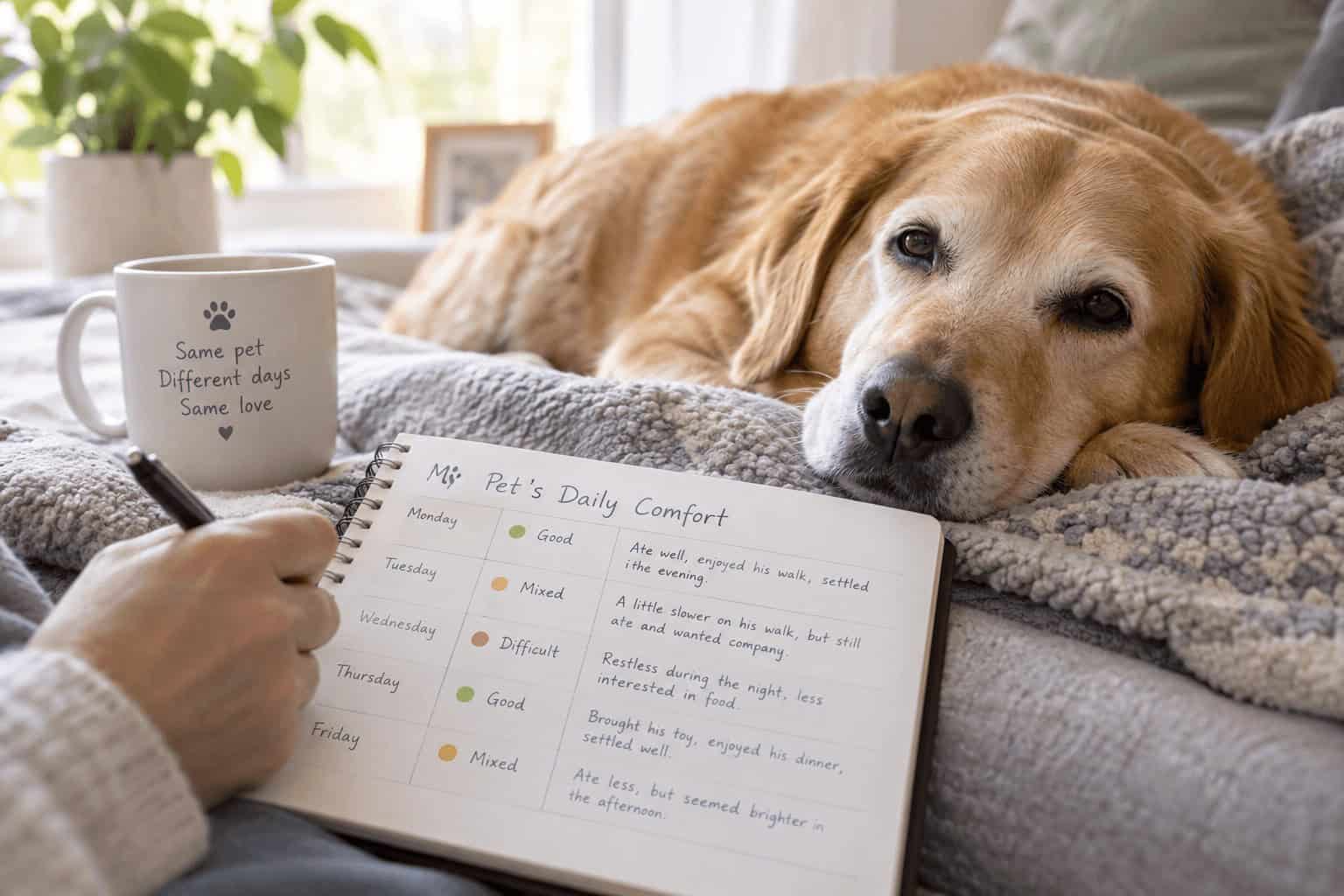
Try a simple good day and difficult day record
You do not need a complicated chart or a detailed diary. A few notes each day can be enough.
You might record:
- Whether your pet seemed comfortable while resting
- How well they ate and drank
- Whether they showed interest in their usual activities
- How easily they moved around
- Whether they wanted company or preferred to be alone
- Any changes in toileting, grooming or behaviour
- Anything that appeared to cause discomfort or distress
You could simply mark each day as good, mixed or difficult, then add a sentence or two explaining why.
Try to focus on how your pet seemed overall rather than recording every difficult moment. The aim is to notice meaningful changes, not to create another source of pressure for you.
Look for patterns over time
One difficult day does not necessarily mean that your pet’s quality of life has changed permanently. Equally, a good day does not always mean that ongoing concerns have gone away.
Looking back over a week or two may help you see a clearer pattern.
Are difficult days becoming more frequent? Is your pet recovering less easily after a difficult spell? Are they still enjoying the things that matter to them?
PDSA recommends keeping a diary or log to help track changes over weeks or months. This can be particularly useful when changes happen gradually.
Pay attention to comfort and everyday behaviour
There are several areas that may help you understand how your pet is coping.
Comfort and pain
Look for changes in your pet’s usual behaviour. They may become quieter, hide more often, seem reluctant to be touched or appear unsettled while resting.
If you are concerned that your pet may be uncomfortable, speak with your vet. There may be changes to their care or treatment that could help.
Movement
Consider whether your pet can get up, move around and reach their usual resting places.
They may no longer manage long walks or stairs, but gentle movement and access to their favourite places may still be important to their wellbeing.
Eating and drinking
A change in appetite can be significant, particularly if your pet begins to lose interest in favourite foods or treats.
Make a note of changes in eating, drinking, weight or digestion, and discuss any concerns with your vet.
Interest and interaction
Notice whether your pet still responds to you, enjoys company or shows interest in their surroundings.
Some pets naturally become quieter as they age. The important thing is to recognise changes from what is normal for your individual pet.
Grooming and toileting
Changes in grooming or toileting habits may indicate that your pet is finding everyday tasks more difficult.
These changes are worth recording and discussing with your vet, particularly if they appear alongside other concerns.
When the balance starts to change
You may begin to notice that your pet is having more difficult days than good ones. Or you may find that the things they once enjoyed are becoming harder for them.
This does not mean that you have to make an immediate decision. Your vet can help you understand what may be causing the changes and whether adjustments to your pet’s care could improve their comfort.
If your pet’s quality of life continues to decline, it may be time to begin talking through their future care and saying goodbye. PDSA’s guidance on when it is time to say goodbye explains why these conversations are worth having before a crisis develops.
Remember that your pet’s needs are individual
There is no single checklist that can give every pet owner a clear answer.
A pet who has slowed down may still be comfortable and content. Another pet may find a smaller change much harder to cope with. Your pet’s age, health, personality and usual routines all matter.
Try to look at the whole picture rather than focusing on one symptom or one difficult day.
If you are unsure what a change means, speak with your vet. They can help you assess your pet’s quality of life and explain the options available.
A simple record can make things clearer
Monitoring your pet’s comfort does not have to be complicated. A few honest notes about their good days, difficult days and favourite activities may help you recognise changes that are otherwise easy to miss.
It can also give you something practical to share with your vet, helping you discuss your concerns more clearly.
If you are beginning to think about saying goodbye, our How It Works guide explains what to expect from an at-home visit. You can also find answers to common questions in our FAQs.
If you are ready to talk through your options, you can contact Gentle Paws Farewell and we can explain the next steps clearly.